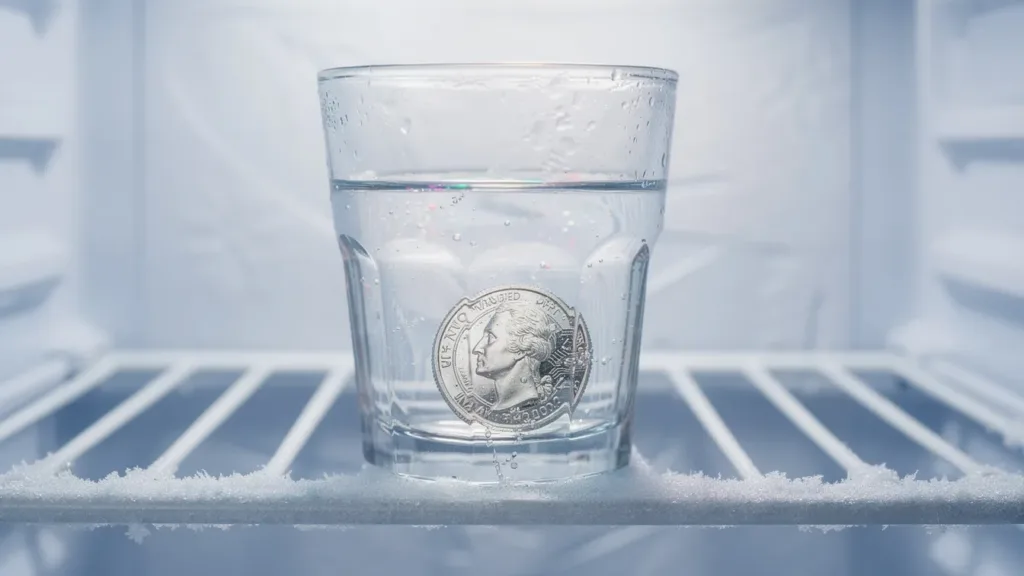

As the cold grip of January settles in, our minds often turn to our trusty freezers. How often have you heard about the quirky “coin in the freezer” trick? You know, the one where you fill a cup with water, freeze it, and then place a coin on top? This supposed “indicator” is meant to alert you if your freezer has lost power, saving you from the potential disaster of spoiled food. But does it really work? Let’s dissect this snowy myth together.
Highlights
- 🌡️ The coin trick’s premise doesn’t quite hold up scientifically.
- ❄️ Ice floating and melting makes for an unreliable indicator.
- 💡 Consider using ice cubes instead for a more straightforward solution.
- 🛑 Knowing proper food safety can save you from wasting food.
Did you know? A full freezer can maintain its temperature for up to 48 hours if the door stays closed during a power outage? That’s a little piece of reassurance you might want to hold onto!
Unpacking the Coin Trick: How It Works (or Doesn’t)
The basic premise of the coin in the frozen water seems simple: the coin sinking into the ice indicates your freezer experienced a power outage, while it remaining on top signals all systems go. But I decided to delve deeper into this freezer phenomenon. After a long and patience-testing wait for the water to freeze, I pulled out my cup. The excited anticipation quickly turned into scepticism as I watched the penny float above the ice, dramatically disproving the underlying assumption that a sinking coin offers a reliable temperature gauge.
Indeed, ice floats. This fundamental truth leads to the absurdity of assuming a penny will gradually sink as the ice melts. Instead, during my experiment, the coin clung to its frosty perch until it succumbed to gravity and slipped beneath the melting ice. I came away not with a conclusive answer but with a puzzled brain and a frosty cup. In short, if you encounter a penny lying at the bottom of your cup, sure, some melting occurred, but how much? That’s where the trick falls flat.
Alternatives: A More Reliable Approach
Now that we’ve debunked the coin theory, you might be wondering what the best course of action is when leaving your home for an extended period. It turns out, there’s a much simpler alternative: ice cubes! Toss a handful into a cup before you leave. When you return, you’ll easily be able to assess how much melting has occurred based on what remains. If they’re stuck together, there’s been some thawing, while intact cubes indicate everything stayed cold and crisp.
- 🧊 Use a cup filled with ice cubes instead of freezing a cup of water.
- 📅 Set a timer reminding you to check the state of the cup upon your return.
- 📦 Consider keeping a zip-top bag of ice cubes in your freezer for added insights.
Food Safety: The Big Takeaway
Let’s pivot for a moment to the crux of it all: food safety. Whether you’re dealing with a suspected outage or simply managing your frozen goods, understanding food safety is paramount. An outage isn’t automatically a death sentence for your food. According to the Food Standards Agency, a full freezer can maintain its temperature for approximately 48 hours if left closed. Therefore, it’s vital to assess your items correctly.
Items that have stayed at 4°C (40°F) or below can often be refrozen without a worry, whereas fully thawed items—unless they are safe to eat at room temperature—should be tossed. The key motto to remember? When in doubt, throw it out!
What You Need to Remember
In this fast-paced world, I’ve learned that tricks often promise more than they deliver. While the coin in the freezer may sound clever, it simply doesn’t live up to its reputation. Embrace the straightforward solution of ice cubes for clear and accurate results. Additionally, always prioritize food safety, especially when faced with uncertainty following a power outage.
As winter unfolds, remember that simple solutions can lead to powerful results. Check back for more insights that help you navigate life’s quirks with ease!