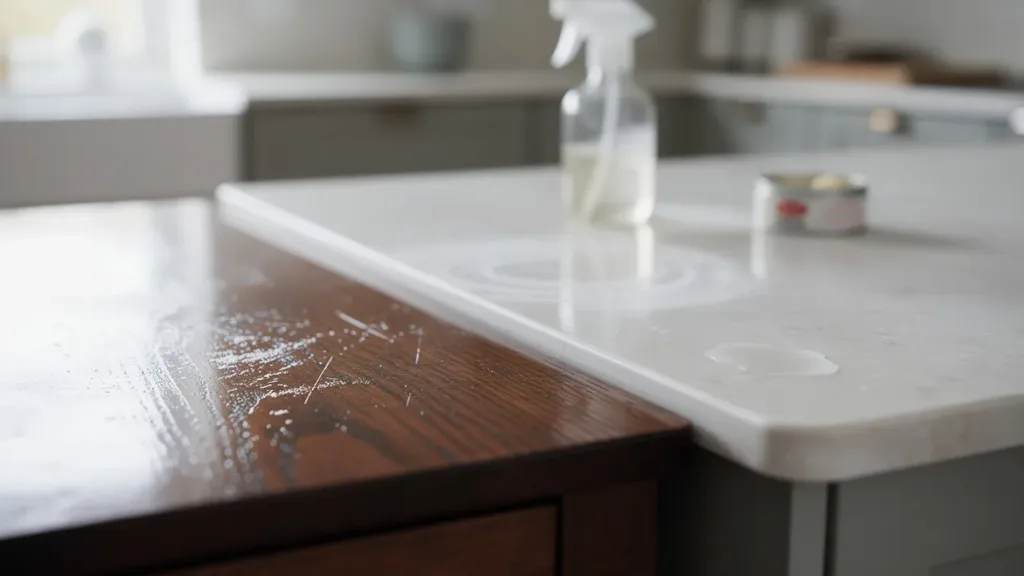

Picture this: You just finished a deep clean, the kind that leaves your home sparkling and fresh. You grab the vinegar—nature’s own cleaning powerhouse—and begin spritzing away. But wait! Could that innocent bottle be secretly waging war on your treasured surfaces? As I discovered, vinegar, while a revered cleaning agent, poses hidden risks that can lead to costly mistakes. Let’s cut through the clutter and explore how vinegar and wax touchpoints could be damaging your home.
Highlights
- 🧼 Vinegar’s Cleaning Power: It’s effective but it’s not for everything!
- ⚠️ Wax Woes: Vinegar can ruin the protective layers on waxed surfaces.
- 🪨 Natural Stone Risks: Acidic cleaners like vinegar can etch your marble and limestone.
- 🌲 Wood Wreckage: Vinegar can warp unfinished wood and damage delicate finishes.
- 🍳 Cast Iron Catastrophe: Stripping the seasoning off your beloved cookware can lead to rust.
A Cautionary Tale: When Cleaning Goes Wrong
Let me take you back to my early cleaning days. Armed with a bubbly bottle of vinegar, I accidentally spritzed my walnut dining table, mistaking it for an irresistible cleaning challenge. Moments later, I noticed a dull haze settling over the beautifully polished surface. It turns out that the same acidity that makes vinegar so effective at banishing grime directly attacked the wax finish I had worked so hard to maintain. Lesson learned: not everything can stand up to vinegar.
As it turns out, I’m not alone. Many people share my misconception that vinegar is a miracle solution for all cleaning needs. Its affordability and perceived safety typically make it the go-to option for tackling household grime. However, its acidic nature can wreak havoc, particularly on delicate surfaces that aren’t often discussed.
Waxed Surfaces: A Love Letter to Care
Waxed furniture is lovely, isn’t it? That beautiful sheen not only looks gorgeous but also provides a layer of surface protection. But slip vinegar into the mix, and you’ll find that lovely gloss quickly turns cloudy. The acidic action strips away wax, destroying the surface that protects your wood underneath. If you value your antique rocking chair, it’s best to steer clear of vinegar completely!
Natural Stone: More Than Just Tough
Many of us bask in the allure of natural stone countertops or flooring. But did you know that materials like marble and limestone contain calcium, which is quite susceptible to acid? Vinegar can cause material deterioration, resulting in unsightly etching. What once glimmered can turn dull in seconds, losing its luxe appeal.
It’s not just pure vinegar that poses risks. Many cleaning products marketed as “natural” still contain vinegar or acidic components, putting your stone surfaces at risk. Trust me—quarrying for new countertops is far more expensive than investing in the right cleaner! 💰
Wood: A Labor of Love
Diving deep into wood surfaces, I quickly discovered that unfinished wood is remarkably porous. Vinegar seeps in, introduces unpleasant odors, and can even lead to warping. It’s not just sloppiness; this could turn a beautiful hand-crafted cabinet into a headache when doors no longer fit.
For finished wood, the risks are mixed. While some tough finishes can handle vinegar’s caress, classics with traditional oils or varnishes could suffer significant damage. Instead of reaching for that vinegar, consider a simple mix of warm water and mild soap for cleaning these treasures.
Cast Iron: Don’t Let It Rust Away
Have you ever marveled at the beauty of a well-seasoned cast iron skillet? Using vinegar on these skillets can strip away their protective layer—essentially undoing years of skilful seasoning. The result? Expensive pans that turn to rust. Ouch! Keep the vinegar for your salad dressing and use a gentle scrub instead. 🥗
It’s a bittersweet fact that some stainless steel appliances are also vulnerable. Inexpensive finishes can lose their sheen when vinegar is introduced, leading to rust and damage. Choosing the right cleaning products is crucial if you want those finishes to last.
Your Cleaning Arsenal: Choose Wisely!
In the world of home cleaning, knowledge is your best weapon. Here are practical tips to keep your spaces clean without the worry of damage:
- 🚫 Avoid vinegar on your waxed surfaces; opt for warm soapy water instead.
- 🔍 Check if your natural stone can handle acidic cleaners—many can’t.
- 🧽 Stick to non-acidic, gentle cleaners for wood surfaces.
- 🍳 If you love cast iron, keep the vinegar on the shelf.
- ⚠️ Read labels! Ensure cleaning products are suitable for your surfaces.
Let’s Start a Cleaning Revolution!
Now that we’re armed with knowledge, it’s time to rethink our cleaning strategies. Let’s champion effective yet safe cleaning practices that truly protect our beloved materials. Every surface in our home tells a story—let’s make sure those narratives aren’t marred by damaging choices.
So, whether you’re sprucing up your home for guests or indulging in that much-needed deep clean, choose your cleaning products wisely. The path to a spotless home doesn’t have to come at the cost of damaged surfaces.
Join me next time as we explore more tips for maintaining your magical spaces because, remember, our homes deserve the best care possible!