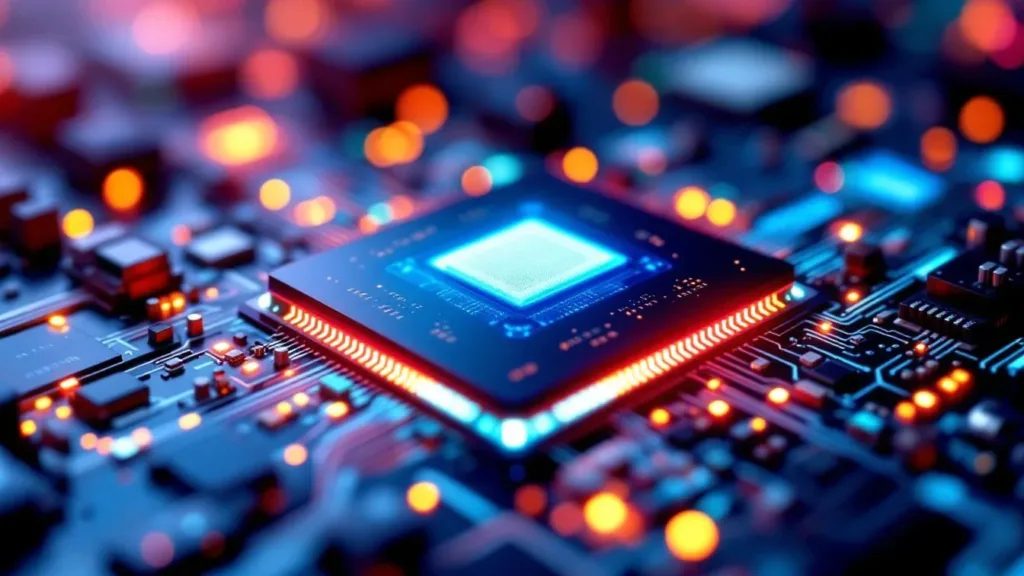

Imagine holding a piece of technology that doesn’t just promise faster processing speeds, but actually delivers an earthquake on a chip! Yes, you heard that right. This isn’t science fiction. It’s a tech breakthrough poised to transform your smartphone experience in just a couple of years. The pulse of innovation is racing, and let me tell you, it’s set to change everything.
Highlights
- 🔍 Phonon lasers generate tiny, earthquake-like vibrations on chips.
- 📱 Smartphones could be up to 5x faster with this technology.
- ⚡ Compact designs will replace bulky wireless components, enhancing smartphone performance.
- 🌍 Possible applications beyond phones include GPS and radar systems.
Last month, researchers unveiled a new chip that can produce controlled surface vibrations—think of it as harnessing the energy of tiny earthquakes. This advance comes from a collaboration between experts at the University of Colorado, among others, and signals a revolutionary shift in mobile technology as we know it.
The Mechanics Behind the Madness
This chip, essentially a phonon laser, is designed to generate surface acoustic waves (SAWs) at frequencies that have previously been unattainable. These waves are not just a scientific curiosity; they act like vibrations that can streamline dozens of functions that current smartphones tackle with multiple components. Just imagine condensing the tech inside your phone down to a compact size that enhances both speed and energy efficiency.
For instance, think about how your phone currently processes radio signals. It uses several parts to filter noise and ensure clear communication. The new technology proposes a more compact radio front end, significantly cutting down on the number of components needed. With this shift, phones might not only shrink in size but also boost their processing speed immensely.
A Boost to Mobile Technology
This isn’t just about making your next device sleeker. The potential hardware advancement comes at a critical time when next-gen smartphones demand more functionalities in less space. Companies like Qorvo have voiced concerns that future phones will need even more filters as wireless standards evolve. As new channels widen, the challenge will be fitting it all into existing form factors. This chip innovation could be the answer.
The impact resonates well beyond performance metrics. By achieving an output power that rivals existing technologies while occupying a fraction of the space, the phonon laser can help pave the way for a more versatile range of applications—from health devices to infotainment systems. Every evening, I find myself wondering how my old flip phone has evolved into a mini-computer with limitless possibilities.
Challenges Ahead and Future Prospects
For instance, while the current prototype functions at about 1 GHz, scaling up to 10 GHz without external support introduces complexities. The industry is holding its breath, hoping the dominoes fall into place just right to see these innovations on the shelves. We might soon witness a world where mobile devices don’t just get thinner but become adept at performing multiple functions simultaneously without compromising on performance. Just picture watching your favourite series, all while navigating multiple applications and making video calls—all seamless. That’s the dream, isn’t it? Just like that, we ride the waves of change, waiting to see where these tiny earthquakes will lead us. Exciting times lie ahead. Stay tuned, and let’s navigate this future together!
Let’s Talk Action!