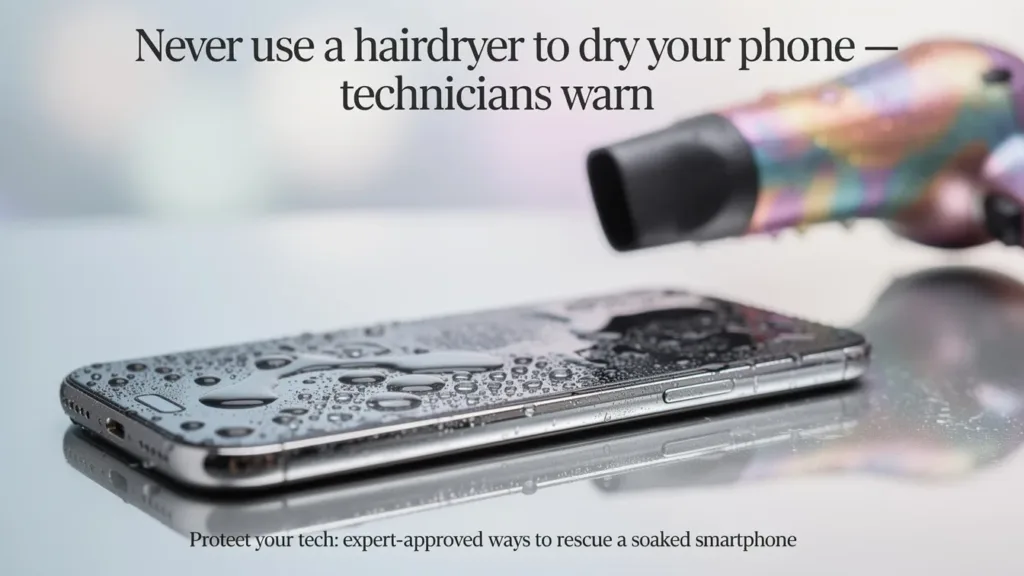

Picture this: it’s a typical Wednesday evening, and I’m happily scrolling through my phone while brewing a cup of tea. Then, disaster strikes! My phone slips right out of my hand and plunks right into a puddle. My immediate instinct? Grab the hairdryer, of course. Sound familiar? Well, pump the brakes because that could lead to a whole new set of problems.
Highlights
- 🚫 Avoid Hairdryers: Using a hairdryer can push water further inside your device.
- ⚠️ Damage Risks: Overheating may harm sensitive internal components.
- 💡 Better Alternatives: Use natural drying methods or silica gel instead!
We all know that phones are our lifelines, but when they get soaked, it can feel like the end of the world. Technicians have a strict warning against using hairdryers to dry out wet phones, and they’re right. The issue isn’t just about water; it’s the delicate dance between heat and electronics that can lead to all sorts of complications. The likelihood of damaging your device increases dramatically if you take the hairdryer route. I learned this the hard way during my frantic attempt to resurrect a drenched phone.
The Temptation of Quick Fixes
When faced with a soaked phone, it’s easy to search for quick fixes. The allure of a hairdryer is strong; it’s good at evaporating moisture from your hair, so why not from your phone? But here’s the kicker: hairdryers produce hot air that can create overheating, introducing a whole new risk level to your phone’s fragile internals. Technicians highlight that this kind of direct heat can warp or damage critical components, particularly the battery and chips. I recall vividly watching in horror as my friend casually waved a hairdryer over her own soaked phone, blissfully unaware of the havoc she could wreak.
- ❌ Avoid direct heat sources like hairdryers.
- 🌀 Instead, try gently shaking out excess water.
- 📦 Consider using silica gel packets, which drawing moisture effectively.
Technicians’ Trusted Techniques
Here’s where the professionals come into play. In my quest for a solution, I consulted various technicians, each echoing the same mantra: allow your phone to dry naturally. Lay it on a towel in a well-ventilated area, ideally somewhere warm but not too hot. Remember, the goal is to let moisture evaporate without forcing it deeper inside the device.
Another handy trick I picked up relates to removing the SIM card and battery if possible. This simple act minimizes complications and allows more airflow to critical areas. Just last week, a colleague of mine relayed how he managed to save his phone by placing it in a bowl of uncooked rice. While I never thought rice was a saviour, it does help absorb moisture. That said, be cautious not to leave it in too long, or it could create another set of problems, like dust or particles finding their way inside.
- 💧 Remove SIM card and battery if applicable.
- 🍚 Try placing the phone in rice or silica gel for about 24-48 hours.
- 🌀 Allow it to dry in a ventilated space away from direct sunlight.
The Bottom Line: Prevention is Key
“An ounce of prevention is worth a pound of cure,” and this couldn’t ring truer when it comes to phones and water. It’s about being proactive—consider investing in a waterproof case if you know you often frequent wet environments. I switched to one myself, and trust me, it’s been a game-changer. Nothing ruins your day like a waterlogged phone. Save yourself the heartbreak and invest in a little prevention upfront.
As winter rolls in and we face more unpredictable weather, remember this tech warning. Your gadgets deserve respect, and with a bit of diligence, you can avoid disasters. Let’s depart from the notion of hairdryers being the quick-fix champions and embrace smarter methods that keep our electronics safe.
Take Action & Protect Your Devices
Now that you’re armed with knowledge, it’s up to you to make the right choice. Next time you face a watery crisis, break the habitual hairdryer reach. Share this with your friends, educate your family, and together let’s make a pledge to protect our devices. If you found this helpful or have your own tricks up your sleeve, be sure to come back for more insights. Together, we can keep our phones—one of our most important daily tools—safe and sound!