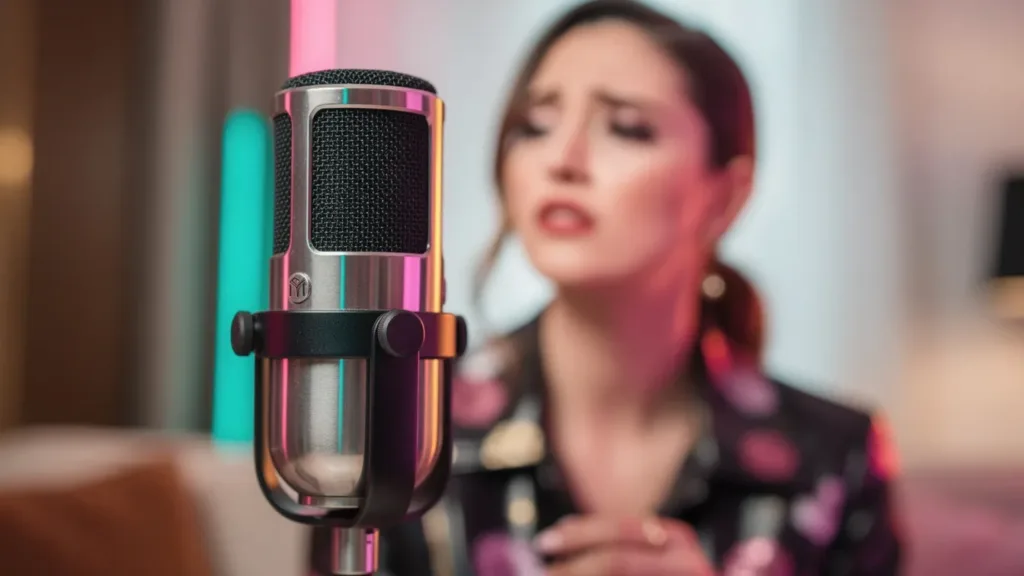

Have you ever cringed at the sound of your own voice on a recording? It’s a universal experience, one that leaves many of us shaken. I remember the first time I heard my voice played back during a class presentation. The sounds coming through the speakers were not what I expected. Instead of the rich, warm tone I was accustomed to hearing when I spoke, I was met with a higher, thinner version that made me recoil in horror. So why does this happen?
Highlights
- Voice Perception: Your voice sounds different to you due to a mix of bone conduction and air conduction.
- Self-Awareness: Many of us fear the dissonance between our recorded voice and how we perceive ourselves.
- Psychological Factors: The brain battles between your internal image of your voice and the external reality.
- Desensitization: Repeated exposure to your recorded voice can lessen discomfort.
The Science Behind the Cringe
The discomfort begins with voice perception. When we speak, two different mechanisms allow us to hear our voices: bone conduction and air conduction. The first routes sound waves through our skull, adding depth and richness to our voice, which we are used to hearing. The latter, however, is how others actually hear us; sound traveling through the air. This creates a stark contrast: my voice, as I hear it, is deeper and more resonant, while recordings tend to strip away those lower frequencies.
Picture this: you’re at a party, and someone is playing a recording of a speech you gave. You hear it and think, “Who is that?” It’s a shocking example of how acoustic perception shifts when moving from a private, familiar space of self-awareness to an external one. That unfamiliar sound can be unsettling!
Psychological Dissonance: The Inner Battle
Here’s where things get tricky: psychologically, our voice is tied to our identity. It’s an extension of who we are. So when you hear a version that doesn’t match the internal one, it feels jarring. Think of it as looking in a mirror and seeing someone who resembles you but feels like a stranger. It’s no wonder many react with a visceral “ew, gross!” upon hearing their recorded voice.
There’s a phenomenon known as “voice confrontation,” where your brain grapples with the discrepancy. As a vocal coach, I’ve seen students squirm at the playback, and it’s often less about the voice quality and more about the existential realization it stirs. No one enjoys realizing they aren’t exactly who they thought they were!
How to Overcome the Discomfort
So, how do you get past that initial cringe? Here are a few practical tips:
- 🎧 Listen Regularly: Make it a habit to listen to recordings of yourself. Exposure is key; after a few weeks, the sting of discomfort tends to subside.
- 📝 Self-Reflection: After each listen, note what you like about your voice. This can help flip the narrative from negative to positive.
- 🔄 Reassess Expectations: Understand that your recorded voice is just another perspective. It’s still you, just seen differently.
Even the most seasoned speakers often dread listening to their recorded speeches. I once had a professional singer admit they couldn’t bear to hear their interviews! It’s a shared human experience, and the key lies in facing it head-on.
The Journey to Acceptance
The bottom line is this: discomfort during playback is standard and doesn’t reflect your actual abilities. Statistics show that almost everyone—regardless of talent—struggles with the same challenge. In fact, experiments have shown that when people don’t know their voices are included in a study, they rate them much more favorably than when they realize it’s them. What does this tell us? It’s all in our heads!
Consider the ways in which you can embrace this new experience. Let your recorded voice be a learning tool rather than a source of dread. By practicing this approach, you’ll gradually find yourself being less critical and more accepting of your true sound.
Embrace Your Unique Sound
Next time you hit that play button, try to dissipate the discomfort by reminding yourself that this is merely a different angle of your voice. The more you listen, the more you’ll come to appreciate its uniqueness. After all, the voice that sounds foreign to you is the one your friends and family recognize and love.
As you continue down this path of self-discovery, keep in mind: every recorded sound vibration, every cringe-worthy playback, is part of the beauty that is you. Trust your authentic voice, and let it resonate with confidence, because it’s the voice that the world has been waiting to hear! 🎤✨